

What is the maximum grinding depth of an Automatic Two - axis Air Float Grinder?
As a supplier of Automatic Two - axis Air Float Grinders, I often encounter inquiries from customers about the maximum grinding depth of our products. This parameter is crucial as it directly affects the efficiency and quality of the grinding process, and ultimately determines whether the grinder can meet the specific requirements of various industrial applications. In this blog, I will delve into the factors that influence the maximum grinding depth of an Automatic Two - axis Air Float Grinder and provide some insights based on our experience in the industry.
Understanding the Automatic Two - axis Air Float Grinder
Before discussing the maximum grinding depth, it's essential to understand the basic principles and features of an Automatic Two - axis Air Float Grinder. This type of grinder utilizes air floating technology to support the workpiece and the grinding wheel, which significantly reduces friction and vibration during the grinding process. The two - axis control system allows for precise movement in both the X and Y directions, enabling complex grinding operations with high accuracy.
The air floating mechanism provides a stable and smooth platform for grinding, ensuring consistent results. The automatic operation feature further enhances productivity by reducing manual intervention and minimizing human errors. These characteristics make the Automatic Two - axis Air Float Grinder suitable for a wide range of materials, including metals, ceramics, and glass.
Factors Affecting the Maximum Grinding Depth
1. Grinding Wheel Characteristics
The type, size, and hardness of the grinding wheel play a significant role in determining the maximum grinding depth. Different grinding wheels are designed for specific materials and applications. For example, a diamond grinding wheel is often used for hard materials such as ceramics and glass, while a silicon carbide wheel is more suitable for softer metals.
The size of the grinding wheel also affects the grinding depth. A larger grinding wheel can generally remove more material in a single pass, allowing for a greater maximum grinding depth. However, larger wheels may also require more power and can generate more heat, which needs to be carefully managed to avoid damage to the workpiece and the grinder.
The hardness of the grinding wheel is another important factor. A harder wheel can maintain its shape better during grinding, but it may also be more brittle and prone to cracking. On the other hand, a softer wheel can conform to the shape of the workpiece more easily, but it may wear out more quickly.
2. Workpiece Material
The material of the workpiece is a crucial factor in determining the maximum grinding depth. Different materials have different mechanical properties, such as hardness, toughness, and ductility. Harder materials generally require a smaller grinding depth to avoid excessive force and heat generation. For example, when grinding a high - strength steel, the maximum grinding depth may be limited to prevent tool wear and surface damage.
Tough materials, such as some alloys, may require a more gradual grinding process to avoid chipping or cracking. Ductile materials, on the other hand, can often tolerate a greater grinding depth, but they may also require more frequent dressing of the grinding wheel to maintain its cutting efficiency.
3. Machine Power and Rigidity
The power and rigidity of the Automatic Two - axis Air Float Grinder are essential for achieving a greater maximum grinding depth. A grinder with higher power can provide the necessary force to remove material from the workpiece. Insufficient power may result in a slow grinding process or an inability to achieve the desired grinding depth.
The rigidity of the grinder is also important. A rigid machine structure can minimize vibration and deflection during grinding, ensuring accurate and consistent results. If the grinder is not rigid enough, the grinding wheel may deviate from its intended path, leading to uneven grinding and reduced surface quality.
4. Cooling and Lubrication
Proper cooling and lubrication are crucial for achieving a greater maximum grinding depth. Grinding generates a significant amount of heat, which can cause thermal damage to the workpiece and the grinding wheel. Cooling systems, such as coolant pumps and nozzles, are used to remove heat from the grinding zone and prevent overheating.
Lubrication also plays an important role in reducing friction between the grinding wheel and the workpiece. This not only improves the grinding efficiency but also extends the life of the grinding wheel. Without adequate cooling and lubrication, the maximum grinding depth may be limited to prevent excessive heat generation and tool wear.
Typical Maximum Grinding Depths
Based on our experience and industry standards, the maximum grinding depth of an Automatic Two - axis Air Float Grinder can vary widely depending on the factors mentioned above. For relatively soft materials such as aluminum, the maximum grinding depth can be up to several millimeters per pass. However, for harder materials like stainless steel or ceramics, the maximum grinding depth may be limited to a few tenths of a millimeter.
It's important to note that these are just general guidelines, and the actual maximum grinding depth may need to be adjusted based on the specific requirements of each application. Our technical team can provide more accurate recommendations based on the details of the workpiece material, grinding wheel selection, and other relevant factors.
Comparison with Other Grinder Types
To better understand the capabilities of the Automatic Two - axis Air Float Grinder, it's useful to compare it with other types of grinders. For example, the Automanual Single - axis Mechanical Grinder typically has a more limited range of motion and may not be able to achieve the same level of precision as the two - axis air float grinder. The single - axis design restricts the grinding operations to a single direction, which can be a limitation for complex workpieces.
The Automatic Through - type Grinder is designed for high - volume production, but it may not be as suitable for applications that require a high degree of precision or a large maximum grinding depth. This type of grinder is often used for continuous grinding of long workpieces, such as bars or tubes.
The Semi - automatic Single - axis Air Floating Grinder combines the advantages of air floating technology with semi - automatic operation. However, its single - axis design and semi - automatic nature may limit its flexibility and productivity compared to the fully automatic two - axis air float grinder.
Optimizing the Grinding Process for Maximum Depth
To achieve the maximum grinding depth while maintaining the quality of the workpiece, it's important to optimize the grinding process. This includes proper selection of the grinding wheel, appropriate adjustment of the grinding parameters, and effective cooling and lubrication.
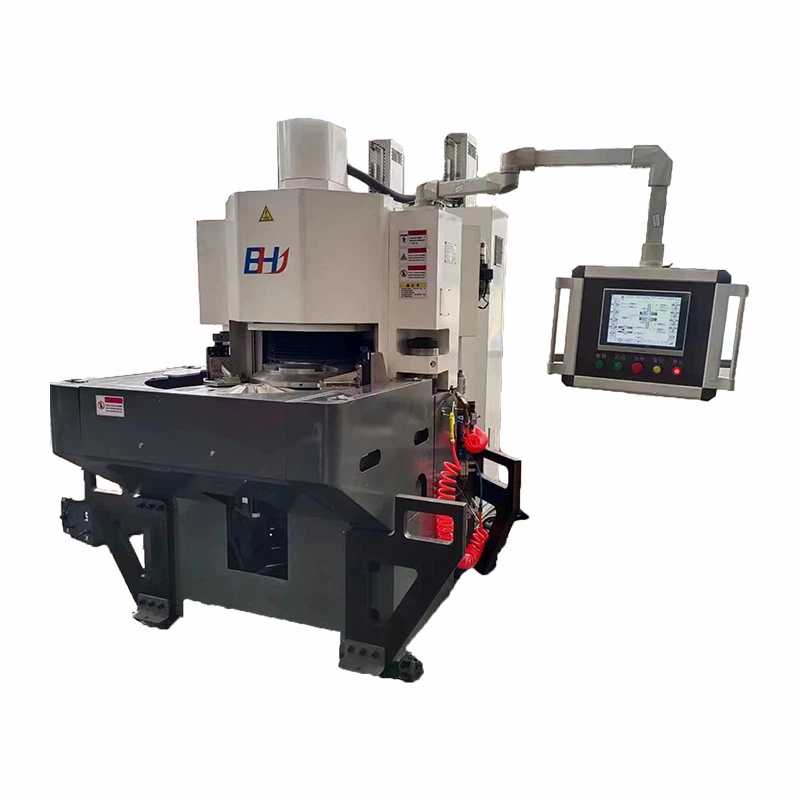

Our company offers comprehensive technical support and training to our customers. We can assist in selecting the most suitable grinding wheel for the specific workpiece material and application. Our technicians can also help adjust the grinding parameters, such as feed rate, spindle speed, and grinding pressure, to achieve the best results.
In addition, we provide high - quality cooling and lubrication systems to ensure efficient heat removal and friction reduction. Regular maintenance and inspection of the grinder are also essential to keep it in optimal condition and to prevent any potential issues that could affect the maximum grinding depth.
Contact Us for Purchase and Consultation
If you are interested in our Automatic Two - axis Air Float Grinders or have any questions about the maximum grinding depth or other aspects of the grinding process, please feel free to contact us. Our sales team is ready to provide you with detailed product information, technical specifications, and pricing. We can also arrange on - site demonstrations and trials to help you make an informed decision.
Investing in a high - quality Automatic Two - axis Air Float Grinder can significantly improve your productivity and the quality of your products. Don't miss the opportunity to enhance your grinding operations with our advanced technology and professional support.
References
- "Grinding Technology: Theory and Applications of Machining with Abrasives" by Peter K. Wright and David A. Batchelor.
- "Handbook of Manufacturing Engineering and Technology" edited by Yoram Koren.
- Industry standards and guidelines related to grinding processes and equipment.