

What are the differences between different models of Automatic Through - type Grinders?
Hey there! As a supplier of Automatic Through-type Grinders, I've seen firsthand the wide range of models out there, each with its own unique features and capabilities. In this blog, I'll break down the differences between various models of Automatic Through-type Grinders to help you make an informed decision when it comes to purchasing the right one for your needs.
1. Speed and Efficiency
One of the most significant differences between different models of Automatic Through-type Grinders is their speed and efficiency. Some models are designed for high-volume production, capable of grinding a large number of workpieces in a short period. These high-speed models often feature advanced automation systems that can handle multiple workpieces simultaneously, reducing cycle times and increasing overall productivity.
For example, our Automatic Through-type Grinder is engineered for maximum efficiency. It uses a state-of-the-art conveyor system that continuously feeds workpieces through the grinding process, allowing for seamless and rapid production. This model is ideal for industries where large quantities of parts need to be ground quickly and accurately.
On the other hand, some models are more focused on precision and may sacrifice a bit of speed for higher accuracy. These models are often used in applications where tight tolerances are required, such as in the aerospace or medical industries. They may have slower grinding speeds but offer more precise control over the grinding process, ensuring that each workpiece meets the exact specifications.
2. Grinding Capacity
Another key difference between models is their grinding capacity. This refers to the size and type of workpieces that the grinder can handle. Some models are designed for small, delicate parts, while others can accommodate larger, heavier workpieces.

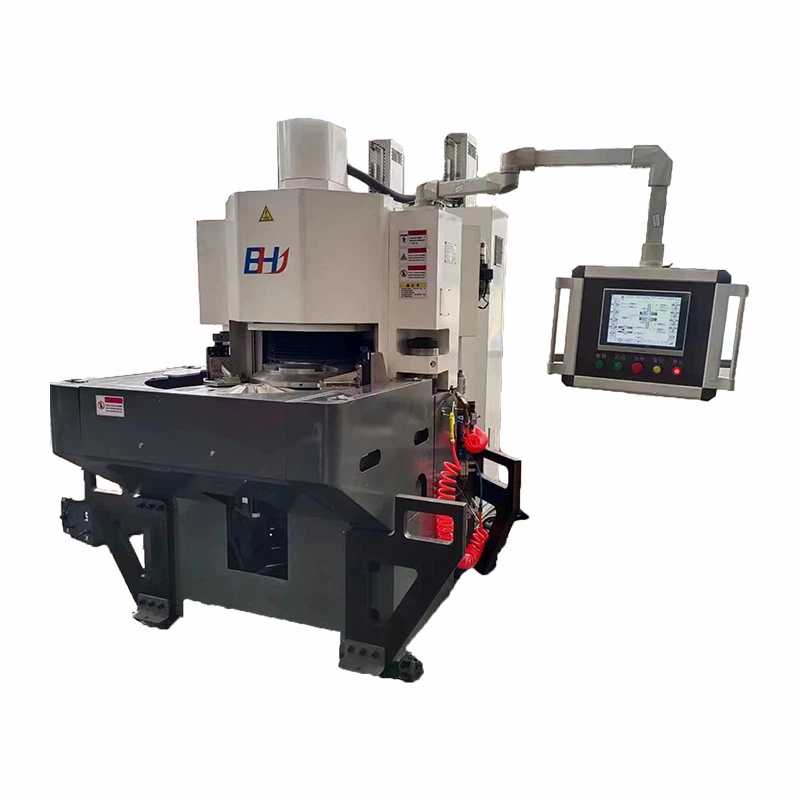
Our Semi-automatic Single-axis Air Floating Grinder is well-suited for grinding small to medium-sized parts. It uses an air floating system to support the workpiece during grinding, providing a stable and precise grinding environment. This model is great for applications where high precision is required for small components, such as in the electronics industry.
In contrast, larger models of Automatic Through-type Grinders can handle much larger workpieces. These models typically have a larger grinding wheel and a more robust construction to support the weight and size of the parts. They are commonly used in industries such as automotive and heavy machinery manufacturing, where large components need to be ground.
3. Automation Level
The level of automation is also an important factor that varies between different models. Some grinders are fully automatic, meaning they can perform the entire grinding process without any human intervention. These models are equipped with advanced sensors and control systems that can adjust the grinding parameters based on the workpiece's characteristics, ensuring consistent and accurate results.
Our fully automatic models are designed to streamline the production process and reduce labor costs. They can be programmed to perform complex grinding operations, such as multiple passes or different grinding profiles, with minimal operator input. This makes them ideal for high-volume production environments where efficiency and consistency are crucial.
On the other hand, semi-automatic models require some degree of operator involvement. For example, the Automanual Single-axis Mechanical Grinder combines manual and automatic functions. The operator may need to load and unload the workpieces, but the grinding process itself is automated. This type of model is a good choice for smaller-scale production or when more flexibility is needed in the grinding process.
4. Control and Monitoring
The control and monitoring capabilities of different models also vary. Advanced models come with sophisticated control systems that allow operators to set and adjust various grinding parameters, such as grinding speed, feed rate, and depth of cut. These systems often have a user-friendly interface that makes it easy for operators to program and monitor the grinding process.
In addition, some models are equipped with real-time monitoring systems that can detect and alert operators to any issues or abnormalities during the grinding process. This helps to prevent costly downtime and ensure the quality of the finished products.
5. Cost
Cost is always a consideration when purchasing a grinder. Different models have different price points, depending on their features, capabilities, and level of automation. Generally, fully automatic models with advanced features and high precision will be more expensive than semi-automatic or basic models.
However, it's important to consider the long-term benefits and return on investment when making a purchasing decision. A more expensive model may offer higher productivity, better quality, and lower operating costs in the long run, making it a more cost-effective choice.
Making the Right Choice
So, how do you choose the right model of Automatic Through-type Grinder for your needs? Here are some tips:
- Assess your production requirements: Consider the volume of workpieces you need to grind, the size and type of parts, and the required precision. This will help you determine the speed, capacity, and automation level you need.
- Evaluate your budget: Determine how much you're willing to spend on a grinder. Remember to consider the long-term costs, including maintenance, energy consumption, and labor.
- Research different models: Look at the features, capabilities, and customer reviews of different models to find the one that best meets your needs. You can also consult with a grinder supplier or industry expert for advice.
If you're interested in learning more about our Automatic Through-type Grinders or have any questions, feel free to reach out to us. We're here to help you find the perfect grinder for your business. Whether you're a small workshop or a large manufacturing facility, we have the right solution for you.
References
- Industry research on grinding machine technology
- Manufacturer specifications and product literature