

What is the difference between a continuous - feed grinding machine and an intermittent - feed grinding machine?
When it comes to grinding machines, understanding the difference between continuous - feed and intermittent - feed grinding machines is crucial for anyone in the manufacturing or machining industry. As a grinding machine supplier, I've had the opportunity to work closely with both types of machines and see firsthand how they perform in various applications. In this blog, I'll delve into the key differences between continuous - feed and intermittent - feed grinding machines, their respective advantages and disadvantages, and where they are best suited.
Working Principles
Let's start by looking at the working principles of these two types of grinding machines. A continuous - feed grinding machine is designed to operate without interruption. The workpiece is continuously fed through the grinding area, allowing for a seamless and continuous grinding process. This is often achieved through conveyor systems or other automated feeding mechanisms. For example, in a large - scale manufacturing setting, a continuous - feed grinding machine can process a long bar of metal, with the bar being fed steadily into the grinder at a consistent rate.
On the other hand, an intermittent - feed grinding machine operates in a step - by - step manner. The workpiece is fed into the grinding area, the grinding operation is performed, and then the workpiece is removed or repositioned before the next grinding cycle begins. This type of machine is more suitable for jobs that require precise control over each grinding pass or for workpieces with complex shapes that need to be ground in a more controlled manner.
Advantages of Continuous - Feed Grinding Machines
One of the main advantages of continuous - feed grinding machines is their high productivity. Since the grinding process is continuous, there is minimal downtime between grinding operations. This makes them ideal for mass production environments where large quantities of workpieces need to be processed quickly. For instance, in the automotive industry, continuous - feed grinding machines can be used to grind engine components such as camshafts and crankshafts at a high rate, ensuring a steady supply of parts for assembly.
Another advantage is the consistent quality of the finished product. The continuous feeding ensures that the grinding parameters remain relatively stable throughout the process, resulting in a more uniform surface finish. This is particularly important in applications where tight tolerances are required.
Continuous - feed grinding machines also tend to be more efficient in terms of energy consumption. Since they operate continuously, they can take advantage of economies of scale and use energy more effectively compared to intermittent - feed machines that may have more start - stop cycles.
Advantages of Intermittent - Feed Grinding Machines
Intermittent - feed grinding machines offer greater flexibility. They can handle a wider variety of workpiece shapes and sizes. For example, if you need to grind a workpiece with a complex contour, an intermittent - feed machine allows you to adjust the grinding process at each step to ensure the best possible result. This is especially useful in industries such as jewelry making or custom machining, where each piece may be unique.
Precision is another key advantage of intermittent - feed grinding machines. Since the operator has more control over each grinding pass, it is easier to achieve high - precision results. This is important in applications where the slightest deviation can affect the functionality of the final product, such as in the aerospace industry.
Intermittent - feed machines are also more suitable for small - batch production. They can be quickly set up for different jobs, and the operator can easily make adjustments between grinding cycles. This makes them a cost - effective solution for companies that produce a variety of products in small quantities.
Disadvantages of Continuous - Feed Grinding Machines
One of the main disadvantages of continuous - feed grinding machines is their lack of flexibility. They are typically designed for specific types of workpieces and grinding operations. If you need to change the workpiece or the grinding requirements, it may be difficult and time - consuming to reconfigure the machine.
Continuous - feed machines also require a more complex setup. The feeding system needs to be carefully calibrated to ensure a smooth and consistent feed rate. Any issues with the feeding system can lead to uneven grinding and poor quality products.
Disadvantages of Intermittent - Feed Grinding Machines
The main drawback of intermittent - feed grinding machines is their lower productivity compared to continuous - feed machines. The start - stop nature of the operation means that there is more downtime between grinding cycles, which can slow down the overall production process.
Intermittent - feed machines also rely more on the skill of the operator. Since the operator needs to make adjustments between each grinding pass, there is a greater potential for human error. This can lead to inconsistent results and increased scrap rates.
Applications
Continuous - feed grinding machines are commonly used in industries such as automotive, aerospace, and metal fabrication, where high - volume production and consistent quality are essential. For example, in the automotive industry, continuous - feed grinding machines are used to grind brake rotors, gears, and other components.
Intermittent - feed grinding machines are more commonly found in industries such as jewelry making, tool and die manufacturing, and custom machining. These industries require the flexibility and precision that intermittent - feed machines can provide.
Our Product Offerings
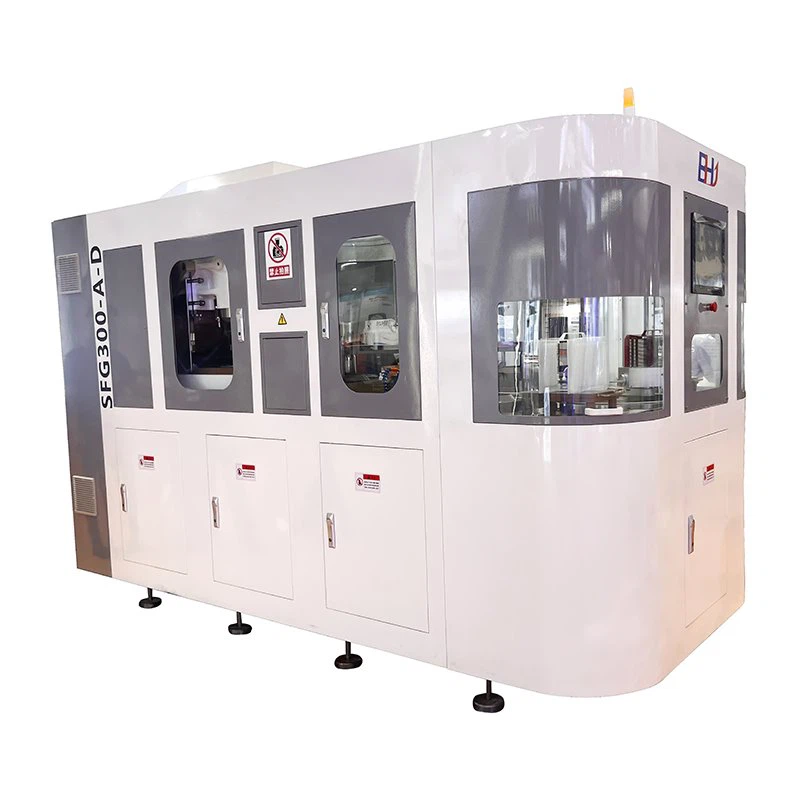
As a grinding machine supplier, we offer a range of both continuous - feed and intermittent - feed grinding machines to meet the diverse needs of our customers. For those looking for high - productivity solutions, we recommend our Automatic Two - axis Air Float Grinder. This machine is designed for continuous - feed operations and can handle a variety of workpieces with high precision.
If you need a more flexible and precise solution for small - batch production or complex workpieces, our Automanual Single - axis Mechanical Grinder and Semi - automatic Single - axis Air Floating Grinder are excellent choices. These machines offer the control and flexibility required for intermittent - feed grinding operations.

Conclusion
In conclusion, the choice between a continuous - feed and an intermittent - feed grinding machine depends on your specific production requirements. Continuous - feed machines are ideal for high - volume production and consistent quality, while intermittent - feed machines offer greater flexibility and precision for small - batch and complex jobs. As a grinding machine supplier, we are here to help you choose the right machine for your needs. If you have any questions or are interested in purchasing a grinding machine, please don't hesitate to contact us for a consultation.
References
- "Grinding Technology: Theory and Applications of Machining with Abrasives" by Stephen Malkin
- "Manufacturing Engineering and Technology" by Serope Kalpakjian and Steven Schmid