

What is the role of the abrasive grain size in the grinding wheel of a grinding machine?
The abrasive grain size in a grinding wheel plays a pivotal and multifaceted role in the performance of a grinding machine. As a trusted grinding machine supplier, we understand the significance of this factor and its impact on various grinding operations. In this blog, we will delve into the details of how abrasive grain size influences the grinding process, the quality of the finished product, and the overall efficiency of the grinding machine.
Understanding Abrasive Grain Size
Abrasive grain size refers to the physical dimensions of the individual abrasive particles that make up the grinding wheel. It is typically measured in terms of mesh size. A smaller mesh number indicates larger abrasive grains, while a larger mesh number represents smaller grains. For example, a 24 - mesh grinding wheel has larger grains compared to a 220 - mesh wheel.
Influence on Material Removal Rate
One of the most significant impacts of abrasive grain size is on the material removal rate. Larger abrasive grains have a greater cutting edge and can remove material more rapidly. When using a grinding wheel with large grains, such as a 36 - mesh wheel, the grinding process can quickly eliminate large amounts of material from the workpiece. This is particularly useful in rough grinding operations where the goal is to remove excess material and achieve a basic shape.
On the other hand, smaller abrasive grains have a lower material removal rate. A 180 - mesh or finer wheel is better suited for finishing operations. The small grains cut more gently, removing only a tiny amount of material at a time. This results in a slower but more precise material removal process, which is essential for achieving a smooth surface finish.
Surface Finish Quality
The abrasive grain size has a direct correlation with the surface finish of the workpiece. Smaller abrasive grains produce a smoother surface finish. When the grinding wheel has fine grains, it creates a series of very small scratches on the workpiece surface. These scratches are so fine that they result in a mirror - like finish. For applications where a high - quality surface finish is required, such as in the manufacturing of precision components for the aerospace or medical industries, using a grinding wheel with a fine grain size is crucial.
In contrast, larger abrasive grains leave deeper scratches on the workpiece surface. While this may not be a problem in some applications where a rough finish is acceptable, it is not suitable for parts that require a smooth and aesthetically pleasing surface. For instance, if you are grinding a metal part that will be visible in a consumer product, a rough finish caused by large - grain grinding wheels can be unacceptable.
Grinding Force and Power Consumption
The size of the abrasive grains also affects the grinding force and power consumption of the grinding machine. Larger grains require more force to cut through the material. This is because they have a larger contact area with the workpiece, and more energy is needed to break off the material chips. As a result, grinding with large - grain wheels typically consumes more power.
Smaller abrasive grains, on the other hand, require less force to cut. They have a smaller contact area with the workpiece, and the material removal process is more controlled. This leads to lower grinding forces and reduced power consumption. For long - term grinding operations, using a grinding wheel with an appropriate grain size can result in significant energy savings.
Wheel Wear and Dressing Frequency
Abrasive grain size impacts the wear rate of the grinding wheel and the frequency of wheel dressing. Larger grains tend to wear out more quickly. Since they are more exposed to the workpiece and have a higher cutting force, they are more likely to break or become dull. This means that grinding wheels with large grains may need to be dressed more frequently to maintain their cutting performance.

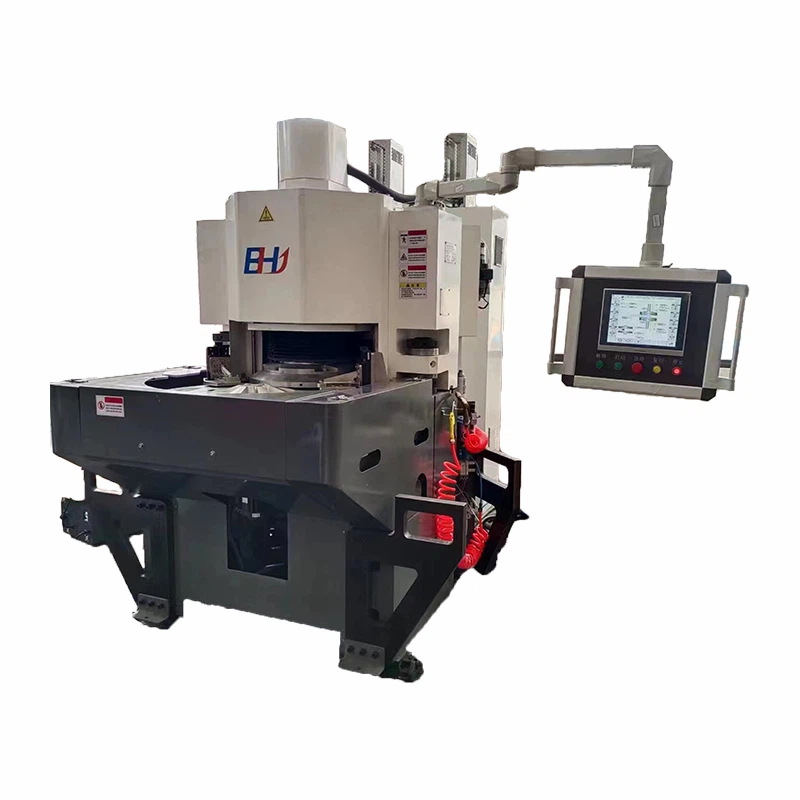
Smaller grains, however, wear more slowly. They are more resistant to breakage and dulling because they are more numerous and share the cutting load more evenly. As a result, grinding wheels with fine grains generally require less frequent dressing, which can save time and reduce the cost of grinding wheel maintenance.
Applications of Different Abrasive Grain Sizes in Our Grinding Machines
At our company, we offer a variety of grinding machines, each suitable for different abrasive grain sizes and grinding applications.
The Automanual Single - axis Mechanical Grinder is a versatile machine that can handle a wide range of abrasive grain sizes. For rough grinding operations, you can use a grinding wheel with a relatively large grain size, such as 60 - mesh, to quickly remove excess material. When it comes to finishing, you can switch to a finer - grained wheel, like a 150 - mesh wheel, to achieve a smooth surface finish.
The Semi - automatic Single - axis Air Floating Grinder is designed for high - precision grinding. It is ideal for using fine - grained grinding wheels, such as 220 - mesh or finer. This machine can provide excellent surface finish quality, making it suitable for applications in the electronics and optical industries where precision is of utmost importance.
The Automatic Through - type Grinder is a high - volume production machine. It can be used with different grain sizes depending on the requirements of the workpiece. For mass - producing parts with a basic shape, a medium - grained wheel (e.g., 80 - mesh) can be used for efficient material removal. For parts that require a better surface finish, a finer - grained wheel can be employed.
Choosing the Right Abrasive Grain Size
Selecting the appropriate abrasive grain size depends on several factors, including the type of material being ground, the desired surface finish, and the grinding operation (rough or finish). For hard materials, larger grains may be needed to effectively cut through the material. For soft materials, smaller grains can be used to prevent smearing and achieve a better surface finish.
If you are unsure about which abrasive grain size is best for your application, our team of experts is here to help. We have extensive experience in the grinding industry and can provide you with professional advice based on your specific requirements.
Conclusion
In conclusion, the abrasive grain size in a grinding wheel is a critical factor that affects the material removal rate, surface finish quality, grinding force, power consumption, wheel wear, and dressing frequency. As a leading grinding machine supplier, we understand the importance of matching the right abrasive grain size with the appropriate grinding machine for optimal performance.
Whether you are looking for a machine for rough grinding or high - precision finishing, we have the right solution for you. Our range of grinding machines, including the Automanual Single - axis Mechanical Grinder, Semi - automatic Single - axis Air Floating Grinder, and Automatic Through - type Grinder, can meet a wide variety of grinding needs.
If you are interested in our grinding machines or need more information about abrasive grain sizes and their applications, please feel free to contact us. We are ready to engage in procurement discussions and help you find the best grinding solutions for your business.
References
- Malkin, S., & Guo, C. (2008). Grinding technology: theory and applications of machining with abrasives. Industrial and Manufacturing Engineering Series.
- Shaw, M. C. (2005). Metal cutting principles. Oxford University Press.
- Trent, E. M., & Wright, P. K. (2000). Metal cutting. Butterworth - Heinemann.