

What is the maximum grinding capacity of the grinding machines I can buy?
Hey there! As a supplier of grinding machines, I often get asked, "What is the maximum grinding capacity of the grinding machines I can buy?" Well, let's dig into this topic and clear up the mystery.
First off, the maximum grinding capacity depends on several factors, including the type of grinder, its design, and the intended application. We offer a variety of grinding machines, each with its own unique capabilities.

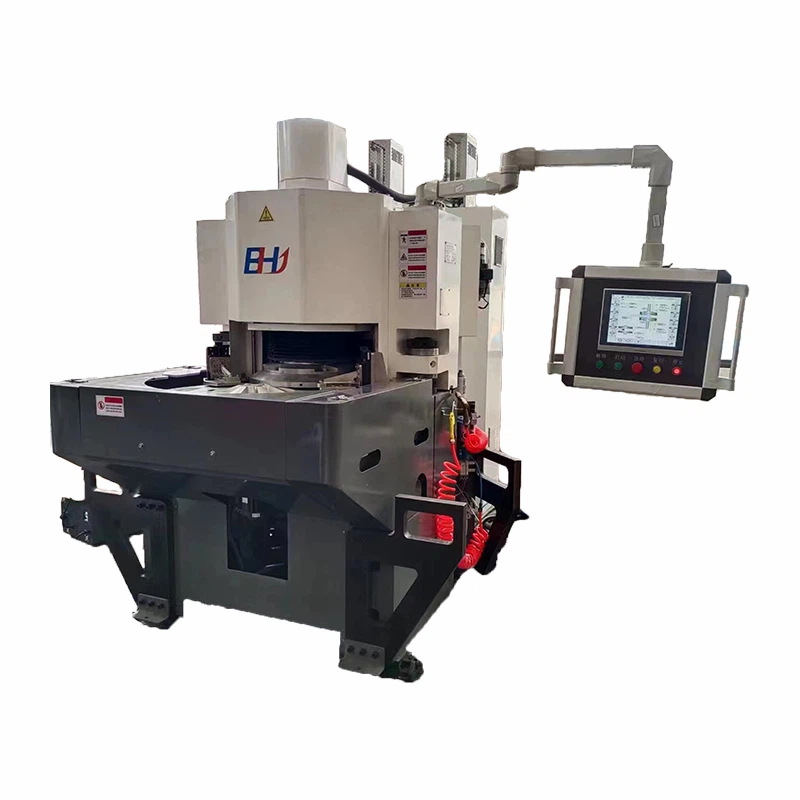
Let's start with the Semi-automatic Single-axis Air Floating Grinder. This bad boy is a great option for precision grinding tasks. The semi - automatic feature gives you some manual control when needed, while the air - floating technology ensures smooth and accurate grinding.
The maximum grinding capacity of the semi - automatic single - axis air floating grinder largely depends on the size of the workpiece it can accommodate. Typically, it can handle workpieces with a diameter ranging from a few millimeters up to around 300 millimeters, and the length can go up to about 500 millimeters. This capacity makes it suitable for a wide range of industries, such as the automotive and electronics sectors, where precision parts need to be ground to exact specifications.
Next up is the Automanual Single - axis Mechanical Grinder. This grinder combines the best of both worlds: automatic and manual operation. It's a solid choice for those who need flexibility in their grinding processes.
In terms of grinding capacity, it can handle slightly larger workpieces compared to the semi - automatic air floating grinder in some cases. The maximum diameter of the workpiece it can grind can reach up to 400 millimeters, and the length can be extended up to 600 millimeters. This larger capacity makes it ideal for grinding larger components used in machinery manufacturing, like shafts or gears.
Now, if you're looking for high - volume, continuous grinding, the Automatic Through - type Grinder is the way to go. This fully automatic grinder is designed to handle a large number of workpieces in a continuous flow.
The automatic through - type grinder has an impressive maximum grinding capacity. It can process workpieces with a relatively large cross - sectional area. For example, it can handle workpieces with a width of up to 800 millimeters and a height of up to 300 millimeters, and it can keep grinding continuously, making it a top choice for mass - production industries, such as the construction and metalworking industries.
But it's not just about the physical size of the workpiece. The grinding capacity also includes the amount of material that can be removed per pass. Different grinders have different material removal rates, which are affected by the power of the motor, the type of grinding wheel, and the feed rate.
For instance, our semi - automatic single - axis air floating grinder has a moderate material removal rate. It's designed for precise grinding, so it usually removes a small amount of material per pass, typically around 0.01 - 0.1 millimeters. This slow but steady approach ensures high - quality finishes on the workpieces.
The automanual single - axis mechanical grinder, on the other hand, can have a higher material removal rate. Depending on the settings and the workpiece material, it can remove up to 0.2 - 0.5 millimeters of material per pass. This makes it suitable for tasks where you need to quickly reduce the size of the workpiece before final finishing.
The automatic through - type grinder, being built for high - volume production, has a relatively high material removal rate. It can remove up to 1 - 2 millimeters of material per pass, allowing it to quickly process large quantities of workpieces.
Another important factor is the hardness of the material. Harder materials, like carbide or hardened steel, are more difficult to grind compared to softer materials like aluminum or brass. Our grinders are designed to handle a wide range of materials, but the maximum grinding capacity might be affected when grinding very hard materials. You may need to adjust the feed rate, the grinding wheel speed, or use a more specialized grinding wheel to get the best results.
When you're considering which grinder to buy, it's crucial to evaluate your specific needs. Think about the size and type of workpieces you'll be grinding, the required precision, and your production volume. If you mainly deal with small, precise parts, the semi - automatic single - axis air floating grinder might be your best bet. For larger components and more flexibility, the automanual single - axis mechanical grinder is a good option. And if you're in the business of mass - producing parts, the automatic through - type grinder will likely be your top choice.
We understand that investing in a grinding machine is a significant decision. That's why we're here to help you every step of the way. Our team of experts can provide you with detailed information about each grinder's capabilities and help you choose the one that best fits your requirements.
If you're interested in learning more about our grinding machines or have any questions about their maximum grinding capacity, don't hesitate to reach out. We're eager to start a conversation and see how we can assist you in finding the perfect grinding solution for your business.
References:
- Industry knowledge and experience in the grinding machine manufacturing field.
- Technical specifications and performance data of our grinding machines.