

Is an Automanual Single - axis Mechanical Grinder suitable for grinding aluminum materials?
As a supplier of Automanual Single - axis Mechanical Grinders, I've received numerous inquiries about whether our product is suitable for grinding aluminum materials. In this blog, I'll delve into the characteristics of aluminum materials, the features of our Automanual Single - axis Mechanical Grinder, and evaluate their compatibility.
Characteristics of Aluminum Materials
Aluminum is a widely used metal in various industries due to its excellent properties. It has a relatively low density, which makes it lightweight, and it offers good corrosion resistance. Aluminum also has high thermal and electrical conductivity. However, when it comes to grinding, aluminum presents some unique challenges.
One of the main issues with grinding aluminum is its softness. Aluminum is a soft metal, and during the grinding process, it tends to adhere to the grinding wheel. This can lead to clogging of the wheel, which not only reduces the grinding efficiency but also affects the surface finish of the workpiece. Additionally, aluminum has a high ductility, meaning it can deform easily under pressure. This requires a grinding process that can control the cutting force precisely to avoid excessive deformation and ensure dimensional accuracy.
Features of the Automanual Single - axis Mechanical Grinder
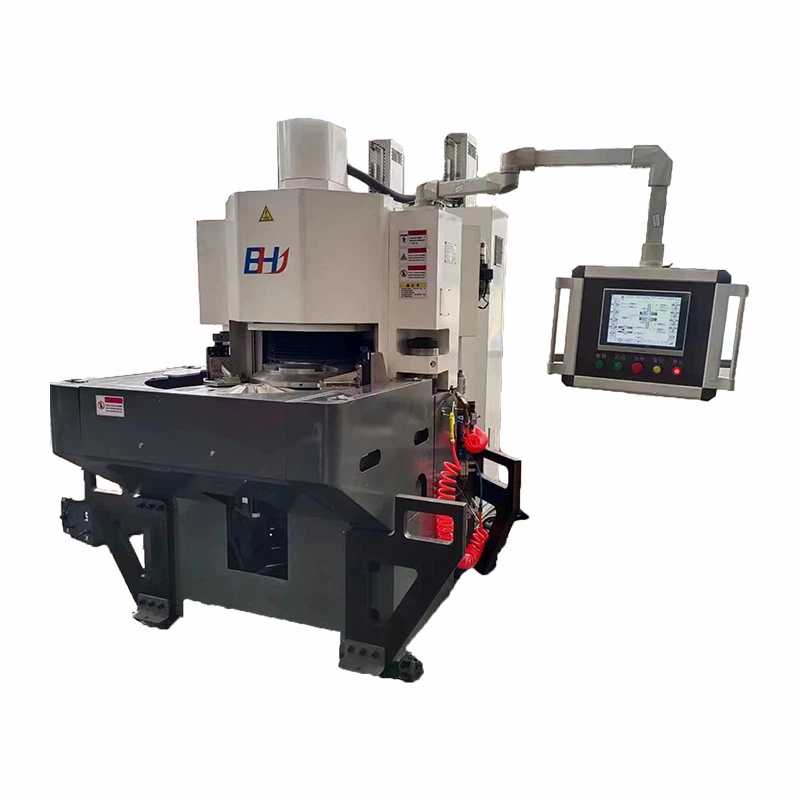
The Automanual Single - axis Mechanical Grinder is a versatile piece of equipment that combines the advantages of manual and automatic operation. It features a single - axis design, which provides a stable and precise grinding motion.
Grinding Precision
The grinder is equipped with high - precision components, such as a linear guide rail and a ball screw. These components ensure accurate movement of the grinding head, allowing for precise control of the grinding depth and feed rate. This level of precision is crucial when grinding aluminum materials, as it helps to maintain the dimensional accuracy of the workpiece and avoid over - grinding or under - grinding.
Grinding Wheel Selection
Our Automanual Single - axis Mechanical Grinder allows for a wide range of grinding wheel selections. For aluminum grinding, we recommend using a grinding wheel with an open structure and a suitable abrasive material. An open - structured wheel can prevent clogging by allowing the chips to escape easily. Abrasive materials such as silicon carbide are often a good choice for aluminum grinding, as they have a sharp cutting edge and can effectively cut through the soft aluminum without excessive adhesion.
Cooling System
To address the heat generated during the grinding process, the grinder is equipped with a cooling system. Cooling is essential when grinding aluminum, as excessive heat can cause the aluminum to soften further, leading to more severe clogging and potential damage to the workpiece. The cooling system helps to maintain a stable grinding temperature, improving the grinding quality and extending the life of the grinding wheel.
Operator Control
The automanual feature of the grinder gives operators a high degree of control. In manual mode, operators can adjust the grinding parameters according to the specific requirements of the aluminum workpiece. This is particularly useful when dealing with complex shapes or small - batch production. In automatic mode, the grinder can perform repetitive grinding tasks with consistent quality, increasing productivity.
Compatibility Analysis
Advantages of Using the Automanual Single - axis Mechanical Grinder for Aluminum Grinding
- Precision and Control: The high - precision components and the ability to control the grinding parameters precisely make the grinder suitable for achieving the required dimensional accuracy and surface finish of aluminum workpieces. Whether it's a simple flat surface or a more complex shape, the grinder can adapt to different grinding requirements.
- Grinding Wheel Adaptability: The wide selection of grinding wheels allows for optimal performance when grinding aluminum. By choosing the right wheel, the problem of wheel clogging can be effectively mitigated, ensuring a smooth and efficient grinding process.
- Cost - effectiveness: For small - to medium - sized enterprises or workshops, the automanual operation mode offers a cost - effective solution. It doesn't require a large investment in fully automatic equipment, while still providing the flexibility to handle different types of aluminum grinding jobs.
Limitations and Considerations
- Production Volume: While the grinder is suitable for small - to medium - batch production, it may not be the most efficient choice for high - volume production. In such cases, a more fully automatic grinder, such as the Automatic Through - type Grinder, might be a better option.
- Complexity of Workpieces: For extremely complex aluminum workpieces with intricate geometries, additional tooling or programming may be required. In some cases, a Semi - automatic Single - axis Air Floating Grinder with more advanced features might be more appropriate to ensure the best grinding results.
Case Studies
To illustrate the practical application of the Automanual Single - axis Mechanical Grinder in aluminum grinding, let's look at a few case studies.
Case 1: Small - batch Aluminum Part Production
A small - scale manufacturing company needed to grind aluminum parts for a custom - made electronic device. The parts had relatively simple shapes but required high dimensional accuracy. Using our Automanual Single - axis Mechanical Grinder, the operators were able to adjust the grinding parameters manually to achieve the desired surface finish and dimensional tolerance. The open - structured silicon carbide grinding wheel effectively prevented clogging, and the cooling system maintained a stable grinding temperature. As a result, the company was able to produce high - quality aluminum parts within a reasonable time frame and at a lower cost compared to outsourcing the grinding process.
Case 2: Medium - batch Aluminum Profile Grinding
A medium - sized aluminum profile manufacturer wanted to improve the grinding efficiency of their products. They used the Automanual Single - axis Mechanical Grinder in automatic mode for the repetitive grinding tasks. By selecting the appropriate grinding wheel and optimizing the grinding parameters, they were able to increase the production rate while maintaining the quality of the aluminum profiles. The grinder's precision and stability ensured consistent results across the batch.

Conclusion
In conclusion, the Automanual Single - axis Mechanical Grinder is generally suitable for grinding aluminum materials, especially for small - to medium - batch production. Its precision, grinding wheel adaptability, and operator control features make it a viable option for achieving high - quality grinding results. However, it's important to consider the specific requirements of the aluminum workpieces, such as production volume and complexity, and choose the most appropriate grinding equipment accordingly.
If you're interested in learning more about our Automanual Single - axis Mechanical Grinder or have any questions regarding aluminum grinding, please feel free to contact us for a detailed discussion and procurement negotiation. We're committed to providing you with the best grinding solutions tailored to your needs.
References
- "Metals Handbook: Machining", ASM International
- "Grinding Technology: Theory and Applications of Machining with Abrasives", Paul K. Wright