

How does an Automatic Two - axis Air Float Grinder improve the roundness of workpieces?
In the field of precision machining, achieving high roundness in workpieces is crucial for various industries such as automotive, aerospace, and electronics. An Automatic Two - axis Air Float Grinder is a remarkable piece of equipment that significantly contributes to improving the roundness of workpieces. As a supplier of Automatic Two - axis Air Float Grinders, I am excited to share how this advanced machinery brings about such improvements.
Understanding the Basics of an Automatic Two - axis Air Float Grinder
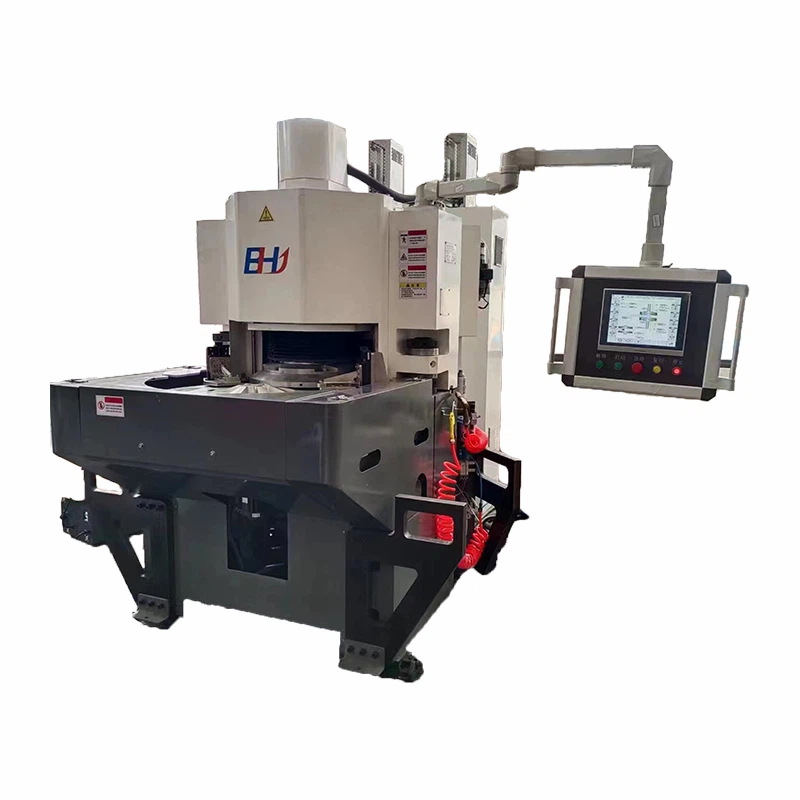
Before delving into how it enhances roundness, it's essential to understand the fundamental components and working principles of an Automatic Two - axis Air Float Grinder. This type of grinder consists of two main axes that work in tandem to perform the grinding operation. The air float system is a key feature, which uses compressed air to create a cushion between the grinding wheel and the workpiece support. This air cushion reduces friction and vibration, allowing for more precise and stable grinding.
The two axes provide independent control over different aspects of the grinding process. One axis is typically responsible for the longitudinal movement of the workpiece, while the other controls the radial feed of the grinding wheel. This dual - axis control enables a high degree of flexibility in adjusting the grinding parameters according to the specific requirements of the workpiece.
Reducing Vibration and Improving Stability
One of the primary ways an Automatic Two - axis Air Float Grinder improves the roundness of workpieces is by reducing vibration. Vibration during the grinding process can cause irregularities on the surface of the workpiece, leading to poor roundness. The air float system in this grinder acts as a shock absorber, minimizing the transmission of vibrations from the grinding wheel to the workpiece.
When the grinding wheel rotates at high speeds, it generates forces that can cause the workpiece to vibrate. However, the air cushion created by the air float system isolates the workpiece from these vibrations. This isolation ensures that the grinding process is carried out smoothly, resulting in a more uniform removal of material from the workpiece surface. As a result, the roundness of the workpiece is improved because there are fewer disturbances that could cause deviations from a perfect circular shape.
Precise Control of Grinding Parameters
The two - axis control feature of the Automatic Two - axis Air Float Grinder allows for precise adjustment of the grinding parameters. The longitudinal movement of the workpiece can be accurately controlled, ensuring that the grinding wheel makes consistent contact with the workpiece along its entire length. This consistent contact is essential for achieving a uniform diameter and roundness.
The radial feed of the grinding wheel can also be finely tuned. By carefully controlling the amount of material removed during each pass of the grinding wheel, the grinder can gradually shape the workpiece into a more perfect circle. This precise control is particularly important when dealing with workpieces that require high - precision roundness, such as bearings or shafts.
Adaptive Grinding for Complex Workpieces
In addition to basic roundness improvement, an Automatic Two - axis Air Float Grinder can adapt to the shape and characteristics of complex workpieces. Some workpieces may have irregularities or variations in their initial shape, which can pose challenges in achieving high roundness. However, the grinder's advanced control system can detect these variations and adjust the grinding parameters accordingly.
For example, if a workpiece has a slight ovality, the grinder can increase the radial feed in the areas where more material needs to be removed and decrease it in other areas. This adaptive grinding process ensures that the final shape of the workpiece approaches a perfect circle, even if it started with some initial imperfections.

Comparison with Other Grinding Machines
To better understand the advantages of an Automatic Two - axis Air Float Grinder in improving roundness, it's useful to compare it with other types of grinding machines.
The Automatic Through - type Grinder is designed for high - volume production. While it can achieve good roundness in many cases, it may not offer the same level of precision as the Automatic Two - axis Air Float Grinder. The through - type grinder typically has a more limited range of control over the grinding process, and its operation is more focused on continuous throughput rather than fine - tuning the roundness of individual workpieces.
The Semi - automatic Single - axis Air Floating Grinder has the advantage of an air float system, which reduces vibration. However, its single - axis control restricts the flexibility in adjusting the grinding parameters. This limitation can make it more difficult to achieve the same level of roundness as a two - axis grinder, especially for workpieces that require complex shaping.
The Automanual Single - axis Mechanical Grinder relies on mechanical components for its operation. While it can be a cost - effective option for some applications, it may be more prone to vibration and less precise in controlling the grinding process compared to the Automatic Two - axis Air Float Grinder. The mechanical nature of the grinder can also lead to more wear and tear, which can affect the long - term roundness accuracy of the workpieces.
Quality Assurance and Process Monitoring
An Automatic Two - axis Air Float Grinder is often equipped with advanced quality assurance and process monitoring systems. These systems can continuously measure the roundness of the workpiece during the grinding process and provide real - time feedback to the control system. If the roundness deviates from the desired specifications, the control system can immediately adjust the grinding parameters to correct the issue.
This real - time monitoring and adjustment ensure that the final roundness of the workpiece meets the required standards. It also reduces the risk of producing defective workpieces, which can save both time and cost in the manufacturing process.
Conclusion
In conclusion, an Automatic Two - axis Air Float Grinder is a powerful tool for improving the roundness of workpieces. Its ability to reduce vibration, provide precise control of grinding parameters, adapt to complex workpieces, and offer quality assurance through process monitoring makes it a superior choice in the field of precision grinding.
If you are in the market for a grinding machine that can significantly enhance the roundness of your workpieces, I encourage you to consider our Automatic Two - axis Air Float Grinder. Our team of experts is ready to assist you in selecting the right model for your specific needs and providing comprehensive support throughout the purchasing process. Contact us to start a discussion about how our grinder can improve the quality of your production.
References
- Smith, J. (2018). Precision Grinding Techniques. New York: Industrial Press.
- Brown, A. (2019). Advanced Grinding Machines and Their Applications. London: Mechanical Engineering Publications.
- Chen, L. (2020). Research on the Improvement of Workpiece Roundness in Grinding Processes. Journal of Manufacturing Science, 35(2), 123 - 135.