

Does an Automatic Through - type Grinder have a self - diagnosis function?
Hey there! As a supplier of Automatic Through - type Grinders, I often get asked a bunch of questions about our products. One of the most common queries is whether an Automatic Through - type Grinder has a self - diagnosis function. Well, let's dive right into it and break it down.
First off, what exactly is an Automatic Through - type Grinder? It's a pretty nifty piece of equipment. You can check out more details about it here. This type of grinder is designed to handle continuous grinding operations. It's great for mass - producing parts with high precision. The workpieces pass through the grinding area automatically, which saves a ton of time and labor compared to manual grinding.
Now, back to the main question: does it have a self - diagnosis function? The answer is, in most cases, yes! Modern Automatic Through - type Grinders are equipped with advanced self - diagnosis systems. These systems are like the brains of the machine. They constantly monitor various aspects of the grinder's operation.

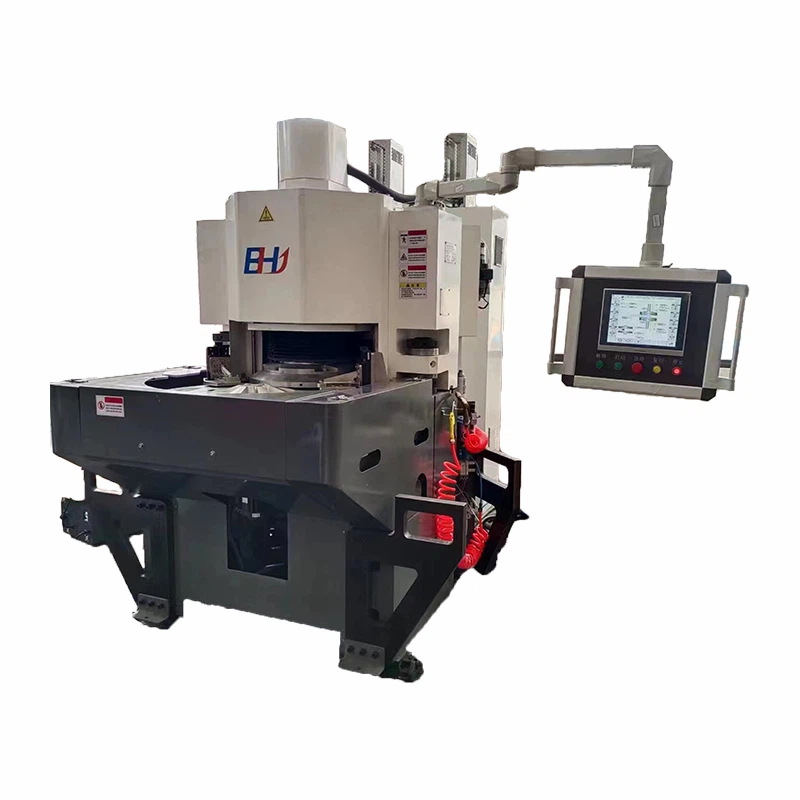
One of the key things the self - diagnosis function looks at is the grinding wheel. The grinding wheel is the heart of the grinder, and its condition is crucial for the quality of the grinding. The self - diagnosis system can detect if the grinding wheel is worn out, damaged, or unbalanced. If it senses any issues, it'll send an alert right away. This helps prevent poor - quality grinding and potential damage to the workpieces.
Another important area that the self - diagnosis system monitors is the machine's lubrication. Proper lubrication is essential for the smooth operation of the grinder. The system can check the oil level, oil pressure, and the quality of the lubricant. If there's a problem, like low oil level or dirty lubricant, it'll let you know. This way, you can take action before it causes any serious damage to the grinder's moving parts.
The electrical components of the grinder are also under the watchful eye of the self - diagnosis function. It can detect issues such as short circuits, over - current, or abnormal voltage. Electrical problems can be dangerous and can lead to machine breakdowns. Thanks to the self - diagnosis system, you can quickly identify and fix these issues, minimizing downtime.
But how does the self - diagnosis function actually work? Well, it uses a combination of sensors and software. The sensors are placed at various points on the grinder to collect data. This data is then sent to the control system, where the software analyzes it. The software has pre - set parameters for normal operation. If the data collected by the sensors deviates from these parameters, the system will flag it as a potential problem.
Let me give you an example. Say the temperature of the grinder's motor starts to rise above the normal range. The temperature sensor will pick up this change and send the data to the control system. The software will compare the temperature with the pre - set limit. If it's above the limit, the self - diagnosis system will trigger an alarm, indicating that there might be an issue with the motor, like over - loading or a cooling problem.
The self - diagnosis function also keeps track of the grinder's performance over time. It can generate reports on things like the number of workpieces processed, the grinding time per workpiece, and the energy consumption. These reports can be really useful for analyzing the efficiency of the grinder and making improvements.
Now, you might be wondering how our Automatic Through - type Grinders compare to other types of grinders in terms of self - diagnosis. For example, take a look at the Automatic Two - axis Air Float Grinder. It also has a self - diagnosis function, but the focus might be a bit different. The Automatic Two - axis Air Float Grinder is more focused on the air - floating system, which provides a high - precision grinding environment. Its self - diagnosis system will pay special attention to the air pressure, air flow, and the stability of the air - floating platform.
On the other hand, the Semi - automatic Single - axis Air Floating Grinder has a self - diagnosis function that is tailored to its semi - automatic operation. It will monitor things like the manual input of the operator, the movement of the single axis, and the interaction between the manual and automatic parts of the grinding process.
In conclusion, the self - diagnosis function of an Automatic Through - type Grinder is a game - changer. It offers a lot of benefits, such as improved quality control, reduced downtime, and better efficiency. It gives you peace of mind knowing that your grinder is constantly being monitored and that any issues will be detected early.
If you're in the market for an Automatic Through - type Grinder or any other type of grinder, we'd love to talk to you. Whether you have more questions about the self - diagnosis function or other features of our products, feel free to reach out. We're here to help you find the perfect grinder for your needs.
References
- General knowledge about Automatic Through - type Grinders and their self - diagnosis functions from industry experience.
- Technical specifications and documentation of Automatic Through - type Grinders, Automatic Two - axis Air Float Grinders, and Semi - automatic Single - axis Air Floating Grinders.