

What is the polishing process optimization method for an edge polishing machine?
In the manufacturing industry, achieving high - precision and high - quality edge finishing is crucial for many products. As a supplier of Edge Polishing Machine, I have witnessed firsthand the importance of optimizing the polishing process for edge polishing machines. In this blog, I will delve into the methods of optimizing the polishing process for edge polishing machines.
Understanding the Basics of Edge Polishing
Before discussing optimization methods, it is essential to understand the basic principles of edge polishing. Edge polishing machines are designed to smooth and refine the edges of various materials, such as glass, metal, and ceramics. The process typically involves using abrasive materials to remove small amounts of material from the edge, creating a smooth and uniform finish.
The key components of an edge polishing machine include the polishing wheel, the workpiece holder, and the control system. The polishing wheel is the primary tool that comes into contact with the workpiece. Different types of polishing wheels, such as diamond - coated wheels or abrasive cloth wheels, can be used depending on the material being polished and the desired finish. The workpiece holder secures the workpiece in place and controls its movement during the polishing process. The control system manages the speed, pressure, and other parameters of the machine.
Factors Affecting the Polishing Process
Several factors can influence the quality and efficiency of the edge polishing process. These factors need to be carefully considered when optimizing the process.
Material Properties
The type of material being polished is one of the most significant factors. Different materials have different hardness, brittleness, and chemical properties. For example, glass is a brittle material that requires a gentle polishing process to avoid cracking, while metal is generally more ductile and can withstand higher pressures. The surface roughness of the initial workpiece also affects the polishing process. A rougher surface may require more aggressive polishing in the initial stages.
Polishing Wheel Selection
The choice of polishing wheel is crucial. The abrasive grain size, bond type, and wheel hardness all play a role in determining the polishing performance. A coarser abrasive grain size is suitable for removing large amounts of material quickly in the rough - polishing stage, while a finer grain size is used for the final finishing to achieve a smooth surface. The bond type affects how the abrasive grains are held on the wheel. For example, a resin - bonded wheel is more flexible and can conform to the shape of the workpiece better, while a metal - bonded wheel is more rigid and can provide higher cutting efficiency.
Polishing Parameters
The speed of the polishing wheel, the pressure applied to the workpiece, and the feed rate are important parameters. A higher wheel speed can increase the material removal rate, but it may also generate more heat, which can damage the workpiece or the polishing wheel. The pressure applied to the workpiece should be carefully controlled. Too much pressure can cause excessive material removal and may lead to surface damage, while too little pressure may result in insufficient polishing. The feed rate determines how fast the workpiece moves relative to the polishing wheel. An appropriate feed rate ensures uniform polishing across the edge of the workpiece.
Optimization Methods for the Polishing Process
Process Planning
- Stage - by - stage Polishing: Divide the polishing process into multiple stages, such as rough polishing, semi - fine polishing, and fine polishing. In the rough - polishing stage, use a coarser polishing wheel and higher pressure to quickly remove the excess material and reduce the surface roughness. As the process progresses to the semi - fine and fine - polishing stages, gradually switch to finer polishing wheels and reduce the pressure to achieve a smoother finish.
- Workpiece Preparation: Ensure that the workpiece is properly prepared before polishing. This may include cleaning the surface to remove any contaminants, and performing any necessary pre - machining operations to achieve a more uniform initial surface.
Parameter Optimization
- Speed and Pressure Adjustment: Conduct experiments to determine the optimal speed and pressure for different materials and polishing wheels. Use a data - logging system to record the polishing results at different parameter settings. By analyzing the data, you can find the combination of speed and pressure that provides the best balance between material removal rate and surface quality.
- Feed Rate Optimization: Adjust the feed rate based on the material, the polishing wheel, and the desired finish. A slower feed rate may be required for more precise polishing, especially in the final finishing stage.
Polishing Wheel Maintenance
- Dressing: Regularly dress the polishing wheel to maintain its cutting ability. Dressing involves removing the dull abrasive grains from the wheel surface and exposing new, sharp grains. This can improve the material removal rate and the surface quality of the workpiece.
- Wheel Replacement: Replace the polishing wheel when it is worn out or damaged. Using a worn - out wheel can lead to inconsistent polishing results and may damage the workpiece.
Automation and Control
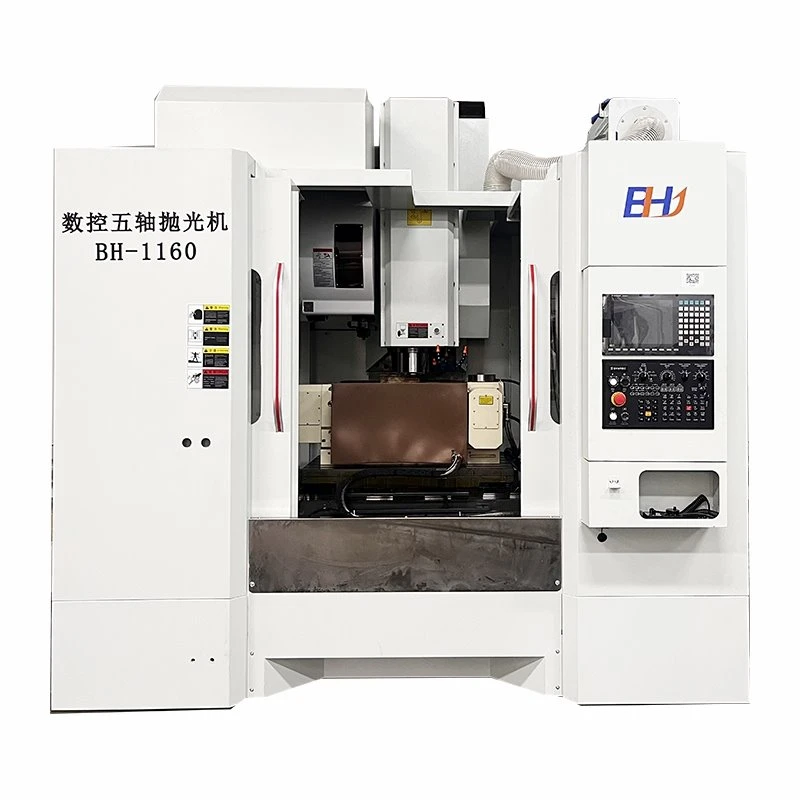
- Use of CNC Technology: Consider using CNC Five - axis Polishing Machine for more precise control of the polishing process. CNC machines can accurately control the movement of the workpiece and the polishing wheel, allowing for complex polishing paths and precise parameter settings.
- Process Monitoring and Feedback: Implement a process monitoring system to continuously monitor the polishing process. Sensors can be used to measure parameters such as temperature, pressure, and vibration. Based on the feedback from these sensors, the control system can automatically adjust the polishing parameters to ensure consistent quality.
Comparison with Other Polishing Machines
Edge polishing machines are specialized for polishing the edges of workpieces, while other types of polishing machines, such as Standard Double - side Polishing Machine, are designed for polishing both sides of a workpiece simultaneously.
The main advantage of edge polishing machines is their ability to provide a high - quality finish on the edges, which is crucial for products where the edge quality affects the overall performance or aesthetics. For example, in the glass industry, a smooth and polished edge can prevent chipping and improve the safety of the glass product.
On the other hand, double - side polishing machines are more suitable for applications where both sides of the workpiece need to be polished simultaneously, such as in the production of semiconductor wafers. They can achieve a high degree of parallelism and flatness between the two sides of the workpiece.
Conclusion
Optimizing the polishing process for edge polishing machines is a complex but essential task. By understanding the factors that affect the polishing process and implementing appropriate optimization methods, you can improve the quality and efficiency of the polishing operation. As a supplier of edge polishing machines, I am committed to providing our customers with the latest technology and solutions to help them achieve the best polishing results.
If you are interested in learning more about our edge polishing machines or have any questions about the polishing process optimization, please feel free to contact us for procurement and further discussions. We look forward to working with you to meet your polishing needs.

References
- Smith, J. (2018). Handbook of Polishing Technology. New York: Wiley.
- Johnson, R. (2020). Advanced Manufacturing Processes: Polishing and Finishing. London: Elsevier.