

How to improve the productivity of a single - sided polishing machine?
In the precision manufacturing industry, single - sided polishing machines play a crucial role in achieving high - quality surface finishes for a wide range of materials, including glass, ceramics, and metals. As a supplier of single - sided polishing machines, I understand the importance of maximizing the productivity of these machines for our customers. In this blog post, I will share several effective strategies to improve the productivity of a single - sided polishing machine.
1. Optimize the Polishing Process Parameters
The first step in enhancing the productivity of a single - sided polishing machine is to optimize the polishing process parameters. These parameters include polishing pressure, rotational speed, polishing time, and the type and concentration of the polishing slurry.
- Polishing Pressure: Appropriate polishing pressure is essential for achieving efficient material removal. If the pressure is too low, the polishing rate will be slow, resulting in longer processing times. On the other hand, excessive pressure can cause damage to the workpiece surface and the polishing pad. Through experiments and process optimization, we can determine the optimal polishing pressure for different materials and workpiece sizes.
- Rotational Speed: The rotational speed of the polishing platen and the workpiece holder affects the relative motion between the polishing pad and the workpiece. A higher rotational speed generally leads to a faster material removal rate, but it also increases the heat generation and the risk of uneven polishing. Therefore, it is necessary to find the right balance between rotational speed and polishing quality.
- Polishing Time: Determining the appropriate polishing time is crucial. Over - polishing can waste time and resources, while under - polishing will not achieve the desired surface finish. By conducting preliminary tests and analyzing the material removal rate, we can set the optimal polishing time for each specific application.
- Polishing Slurry: The type and concentration of the polishing slurry have a significant impact on the polishing process. Different materials require different types of abrasives in the slurry. For example, diamond abrasives are commonly used for hard materials such as ceramics, while cerium oxide abrasives are suitable for glass polishing. The concentration of the slurry also affects the polishing rate and quality. A proper slurry concentration ensures efficient material removal without causing excessive wear on the polishing pad.
2. Regular Maintenance and Upgrades
Regular maintenance of the single - sided polishing machine is vital for its long - term productivity. Here are some key maintenance tasks:

- Cleaning: Regularly clean the polishing platen, workpiece holder, and other components to remove debris and polishing residues. This helps to prevent clogging of the polishing pad and ensures uniform polishing.
- Lubrication: Proper lubrication of moving parts such as bearings and gears reduces friction and wear, improving the machine's operational efficiency and extending its service life.
- Pad Replacement: The polishing pad wears out over time, which can affect the polishing quality and productivity. Replace the polishing pad at regular intervals according to the manufacturer's recommendations.
- Upgrades: Consider upgrading the machine's control system, drive motors, or other components to improve its performance. For example, an advanced control system can provide more precise control of the polishing process parameters, leading to better productivity and quality.
3. Operator Training
Well - trained operators are essential for maximizing the productivity of a single - sided polishing machine. Provide comprehensive training to operators on the following aspects:
- Machine Operation: Teach operators how to correctly set up the machine, load and unload workpieces, and adjust the process parameters.
- Process Optimization: Train operators to analyze the polishing results and make appropriate adjustments to the process parameters to improve productivity and quality.
- Troubleshooting: Equip operators with the skills to identify and solve common problems that may occur during the polishing process, such as uneven polishing, pad damage, or slurry leakage.
4. Use of Advanced Workholding Solutions
Efficient workholding solutions can significantly improve the productivity of a single - sided polishing machine. Here are some advanced workholding methods:
- Vacuum Chuck: A vacuum chuck provides a secure and uniform holding force for the workpiece, ensuring stable polishing. It can also be easily adjusted to accommodate different workpiece sizes and shapes.
- Magnetic Chuck: For ferromagnetic workpieces, a magnetic chuck offers a reliable and efficient holding solution. It allows for quick loading and unloading of workpieces, reducing downtime.
- Fixture Design: Design custom fixtures to hold multiple workpieces simultaneously. This can increase the throughput of the polishing machine and improve overall productivity.
5. Integration with Automation Systems
Integrating the single - sided polishing machine with automation systems can further enhance productivity. Here are some examples:
- Robotic Loading and Unloading: Use robots to load and unload workpieces from the polishing machine. This reduces the time required for manual handling and improves the consistency of the polishing process.
- Automated Process Control: Implement an automated process control system that can automatically adjust the polishing process parameters based on real - time feedback. This ensures optimal productivity and quality even when there are variations in the workpiece material or other factors.
6. Consider Complementary Machines
In some cases, using complementary machines can improve the overall productivity of the polishing process. For example, our 2.5D Multi - station Automatic High - speed Polishing Machine can be used in combination with a single - sided polishing machine to achieve more complex polishing tasks. The multi - station design allows for simultaneous processing of multiple workpieces, significantly increasing the throughput.
Another option is the Multifaceted Integrated Stacking Machine, which can be used to prepare workpieces for single - sided polishing. It can stack and align workpieces efficiently, reducing the setup time for the polishing machine.
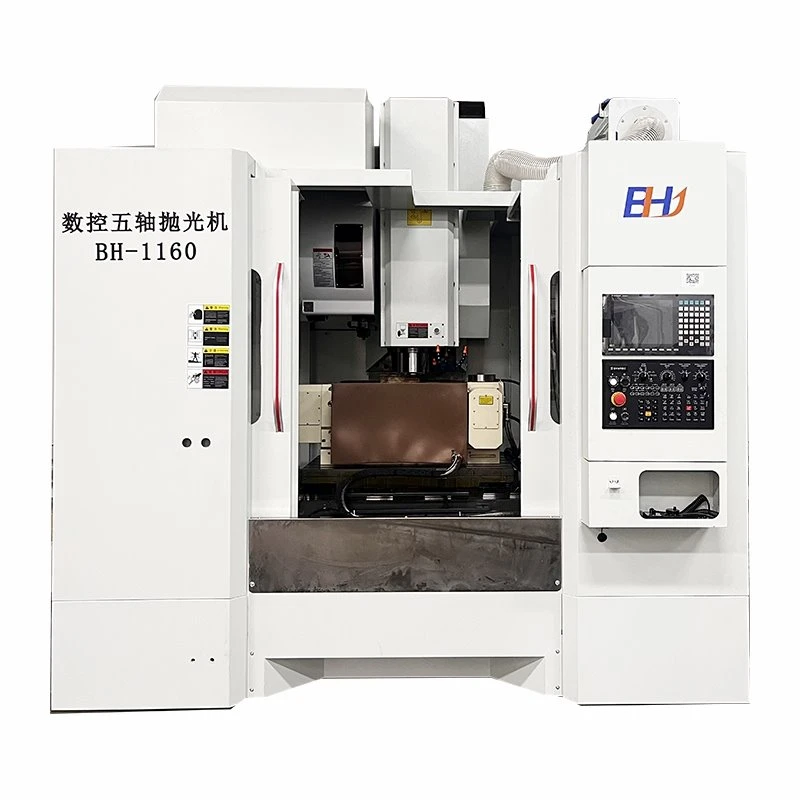
The CNC Five - axis Polishing Machine can also be a valuable addition to the production line. Its five - axis capabilities allow for more precise and flexible polishing of complex - shaped workpieces, which can enhance the overall productivity when used in conjunction with a single - sided polishing machine.
Conclusion
Improving the productivity of a single - sided polishing machine requires a comprehensive approach that includes optimizing process parameters, regular maintenance, operator training, advanced workholding solutions, automation integration, and the use of complementary machines. By implementing these strategies, our customers can achieve higher throughput, better quality, and lower production costs.
If you are interested in learning more about our single - sided polishing machines or need advice on improving the productivity of your existing equipment, please feel free to contact us for a detailed consultation. We are committed to providing you with the best solutions to meet your manufacturing needs.
References
- Smith, J. (2018). Precision Polishing Technology. New York: Wiley.
- Brown, A. (2019). Advanced Manufacturing Processes for Surface Finishing. London: Elsevier.
- Chen, L. (2020). Optimization of Polishing Processes in the Semiconductor Industry. Beijing: Science Press.